The bottleneck was our own hours.
Every new brand cost us about 23 minutes by hand: 13 to find it by reading creators' sponsored posts, 3 to identify its real website, and 7 to find a contact and write the email. Our 108 hand-sent emails in August took an estimated 18 hours. At one inbox's pace of 20 emails a day, that's a modelled 19 hours of outreach a week, before a single reply.
Follow-ups were the first thing to slip. A UK cat-food brand that later sent a brief had simply missed our first email. Without a follow-up, that conversation never happens.
We did it by hand first, then timed every step.
Before automating anything, we did the outreach by hand: 108 emails in August. That gave us real minutes per step. The database added the rest: finding one sponsor brand takes reading 26.3 posts. Then we sorted each step by one question: is this reading and copy-paste, or a judgement a brand will see?
| Step | By hand | What we automated | What stays human |
|---|---|---|---|
| Find a brand in sponsored posts | 13 min | AI reads every post and saves its verdict with the reason | We check the uncertain ones |
| Identify its website | 3 min | Matched and checked against the brand's handle | We review the brand list |
| Find a contact, write the first email | 7 min | Researched and drafted, with the right creator picked | We read it and click send |
| Write and send a follow-up | 3 min | Today's list, message ready | We click send |
| Vet a creator for a brief | 2 min, +10 for an audience read | Profile and audience checks | We review the shortlist |
The rule we built to: AI does the reading and the copy-paste. Nothing reaches a brand or a creator without our click.
Four flows, nine workflows, one dashboard.
One person ran the whole thing from a browser, without having to open n8n. The dashboard starts a run with one click; n8n calls the research tools and saves everything to Postgres; the dashboard reads it back as a work queue.
- Finding brands. Reads influencers' Instagram posts, has AI spot the sponsored ones and works out which company is behind each sponsor handle.
- Research and email drafts. Finds the brand's contact, picks a roster creator who hasn't worked with the brand yet, and drafts a first email for review.
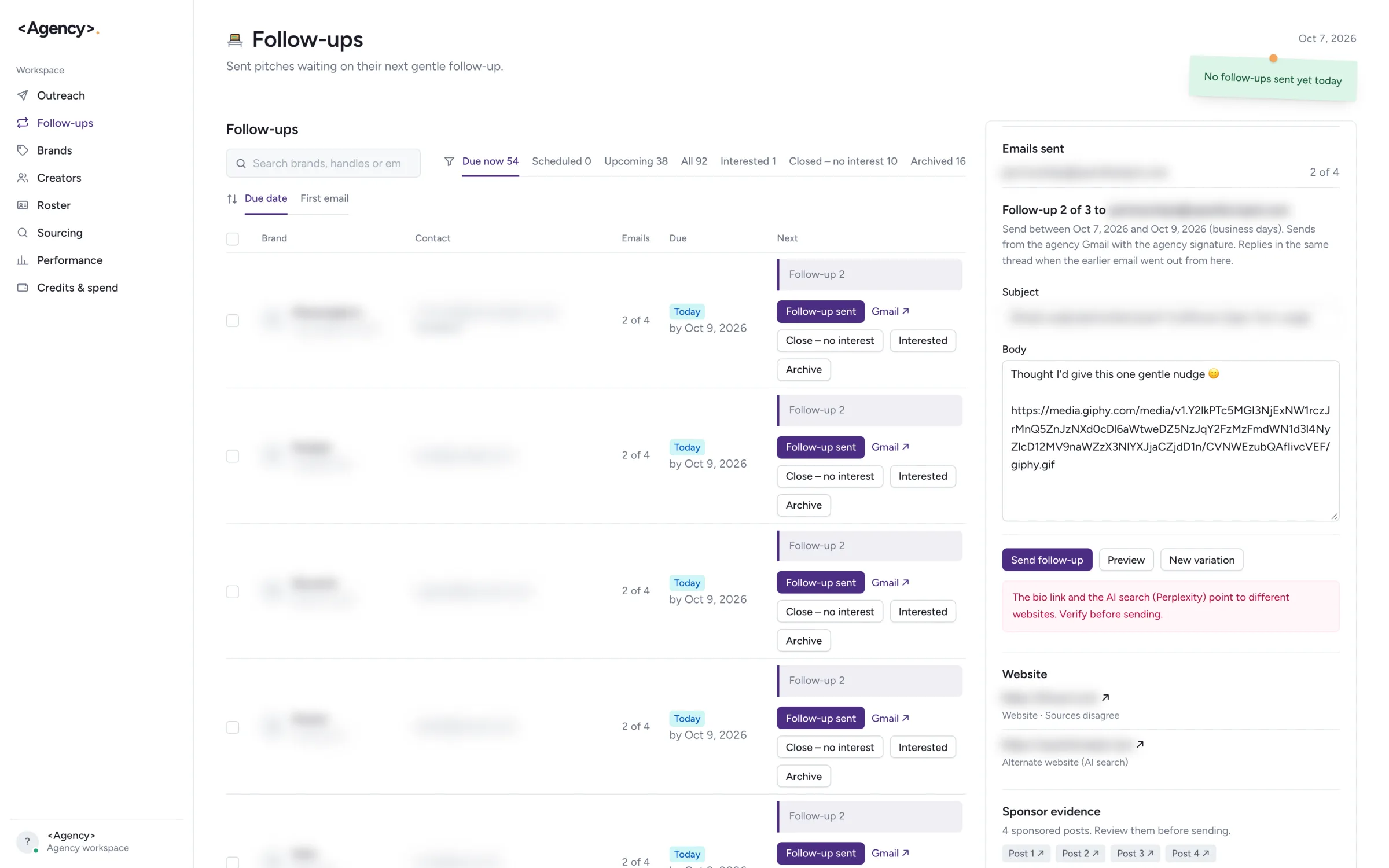
- Follow-ups. Shows who is due today with the message ready, and sends from Gmail in the same thread with the agency signature.
- Finding creators for a brief. Vets creators against a brand's brief: is she a creator, does she have cats, is she in the UK, who comments on her posts.
Five decisions behind it.
- Postgres, not Google Sheets. The first version wrote to Sheets, which throttles API calls and slows down as tabs grow, so big runs took too long. We moved to Postgres, first as a 1:1 copy of the tabs to keep the switch low-risk, then gave every brand one key: its website. A brand's US and Canada handles became one brand, and its outreach, contacts and notes followed it. The trade-off: a database instead of a sheet anyone can open, which is why we built the dashboard. 26 tables, 1 key per brand.
- A dashboard, not the n8n editor. Each page answers one question: which brands to research, which email to send, who is due a follow-up. The trade-off: 8 pages to build and maintain. In return, someone who has never opened n8n can run the business.
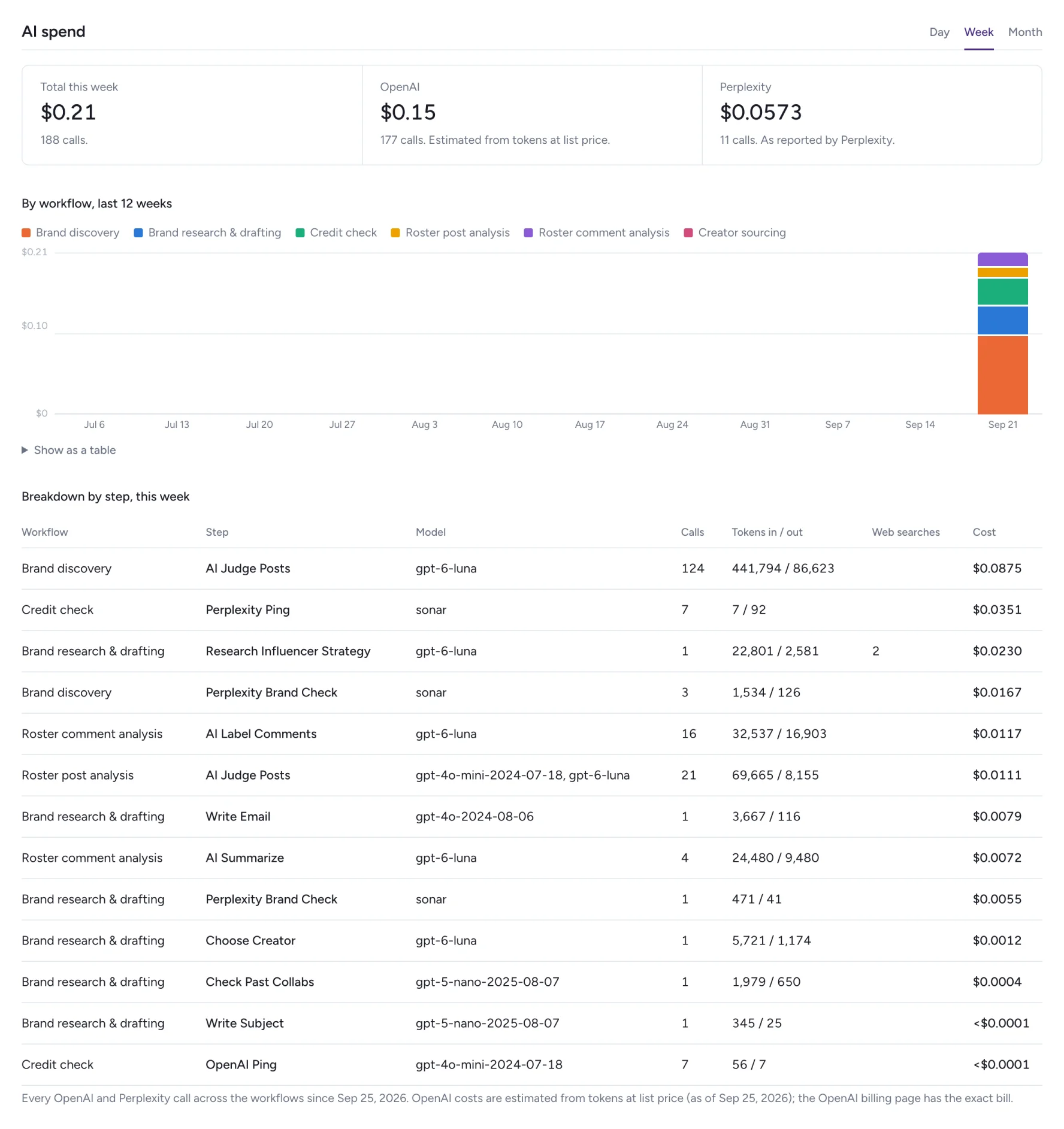
- One tool per research job. Instagram doesn't say who owns a handle, and a website doesn't say who runs creator partnerships. So Apify reads Instagram and LinkedIn, Firecrawl reads brand websites, Perplexity checks whether a handle is a real company, and OpenAI judges posts and drafts emails. The trade-off: five providers to watch, so a credit check stops a run when one runs out, instead of carrying on with empty research. 15 sponsor handles identified for $0.02 of Perplexity.
- Evidence over guesses. AI isn't fully repeatable: judging the same post twice can give a different answer. So every post is saved whole with the AI's verdict and its reason, uncertain answers stay labelled as uncertain, and a re-check needs no new scraping. The trade-off: more storage, for answers we can audit. 1,261 posts saved with their verdict and reason.
- Slow, supervised sending. The first automated batch, 22 follow-ups on 24 Sep, went out seconds apart. From 28 Sep, bulk follow-ups were spaced 5–7 minutes apart so Gmail never sees a burst, and any brand marked as replied is held back. Every AI call is logged with its cost. The trade-off: a day's 20 sends take about two hours to go out instead of a minute. 512 AI calls logged: $0.39.
What it did in its first 10 days.
Where it got to
The system ran on a real business, with real people on the other end. The agency had a roster: five creators agreed to join, and three more got in touch on their own.
- 23 Aug. We email a UK cat-food brand by hand. No reply.
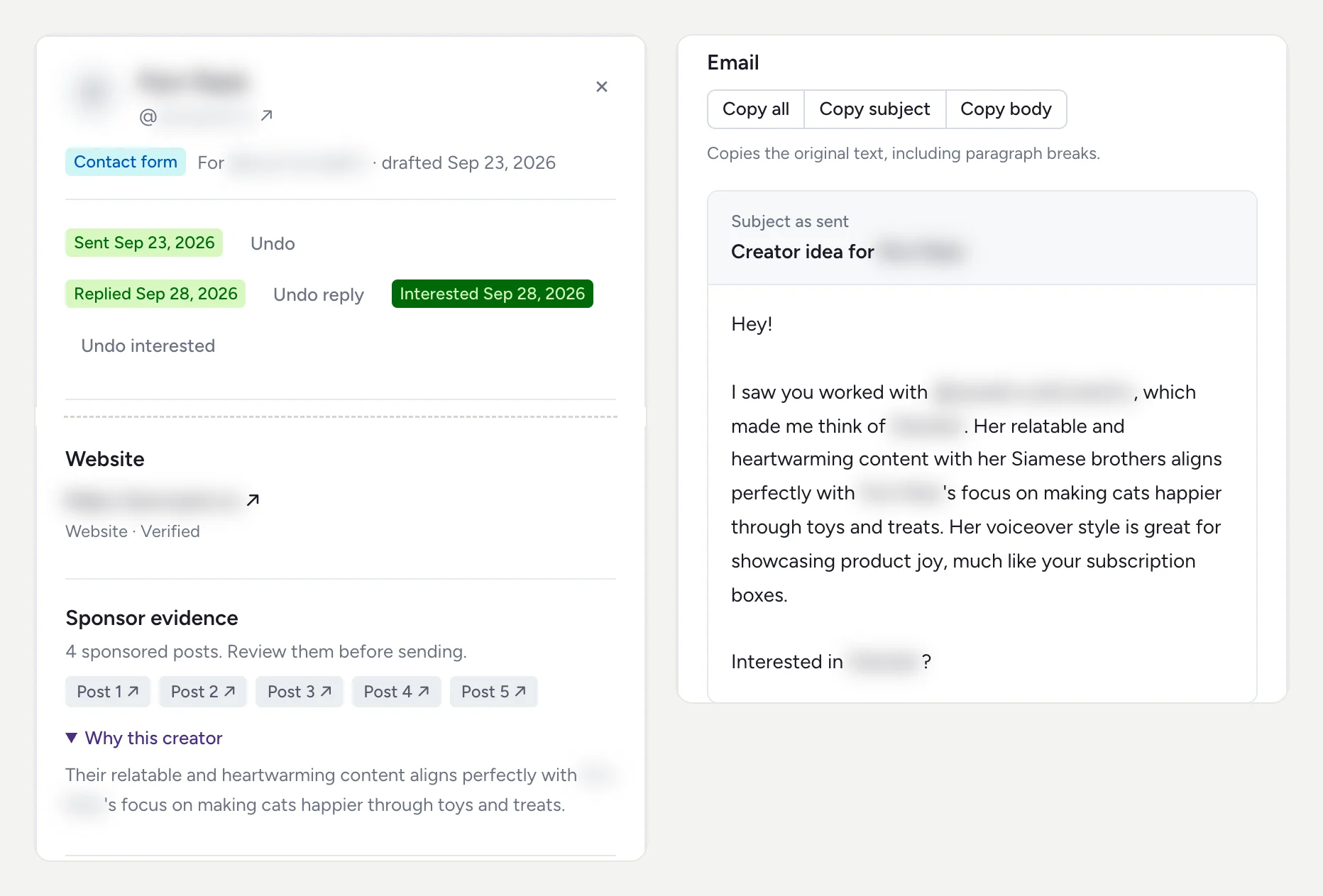
- 24 Sep, 8:53. The follow-up flow sends 22 check-ins to brands that had gone quiet. Three reply that day.
- 24 Sep, 9:01. The cat-food brand answers in eight minutes. They'd missed the first email, and they want UK-based creators.
- 28 Sep. Their brief: UK audience, mostly female, face-to-camera, any follower count.
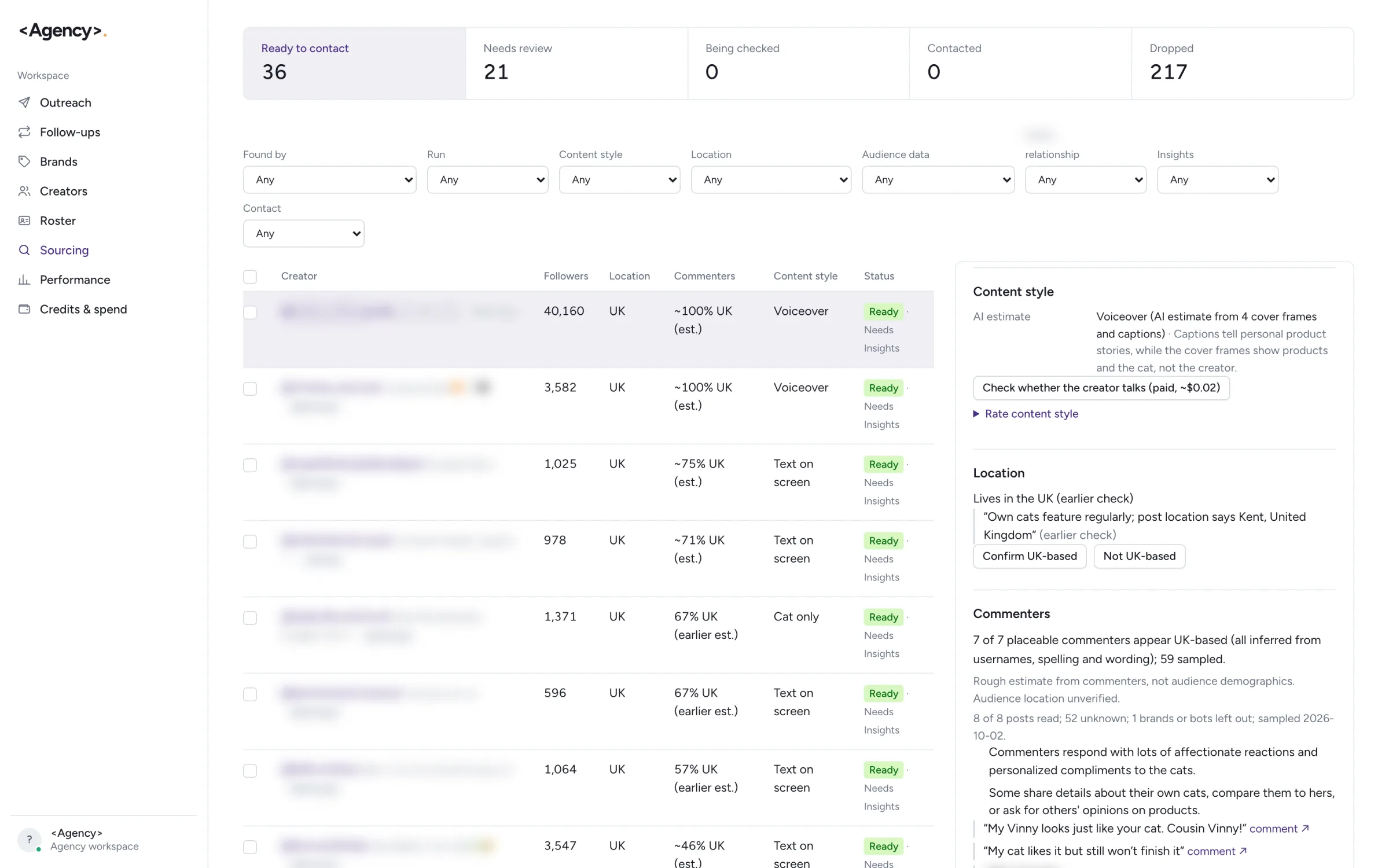
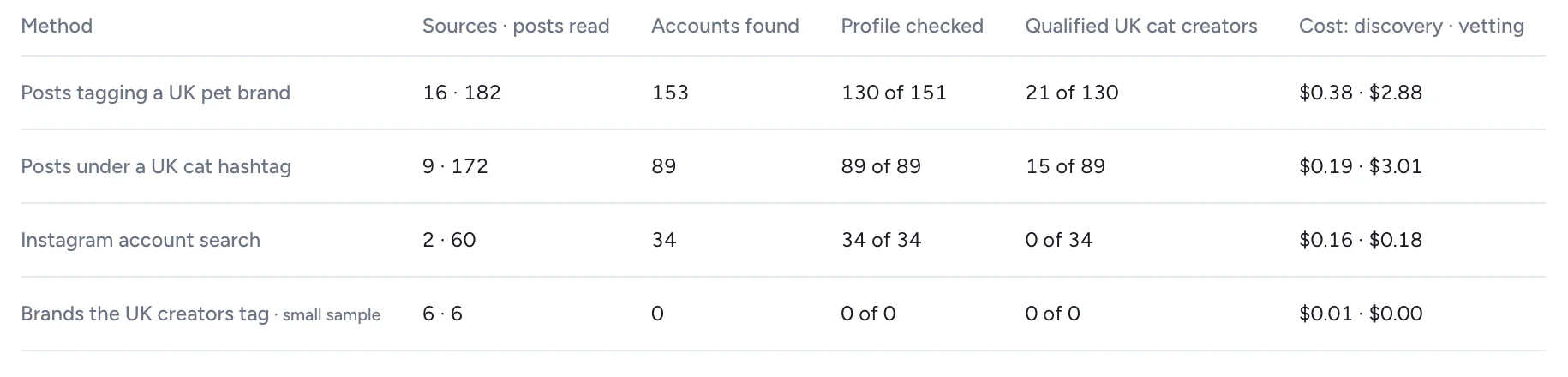
- 1 Oct. The sourcing flow vets 253 creators against it and shortlists 36: a modelled 19 hours of work by hand.
- October. We close the agency before sending the shortlist.
What one inbox can handle, modelled.
- Find 42 new brands in sponsored posts9.1 h
- Identify each brand's website2.1 h
- Find contacts, write 42 first emails4.9 h
- Write and send 58 follow-ups2.9 h
or about $190 a week paying a virtual assistant
- AI reads every post, finds the brandsauto
- Website, contact & first email draftedauto
- Today's follow-ups, ready to sendauto
- Review and send, 20 min a day1.7 h
About $6 a week in AI & APIs, and you stay in control: no VA to brief, chase or manage.
Modelled for one inbox at 20 emails a day, from counts in the live database. Running one full inbox costs about $6 a week. How we calculated this
Why we stopped running the agency
The system did its job. Running the agency on it showed us which part we wanted to do every day, and it was the building. Influencer marketing isn't our passion, and our background is production automation. So in October we stopped, before closing a paid deal with a brand, and put that time into building systems like this one for other businesses. If you hire us, you're hiring the part we chose.
What this means for your business.
The pattern isn't about cats: collect the data, let AI do the reading, keep the evidence, and give a person a clear next step. Partner research, supplier vetting and recruiting shortlists have the same shape. Each needs its own sources and rules.
If your team loses hours to research, copy-paste and follow-ups, this is how we'd start:
- Step 01
Map it
We'll time each step of one process with your numbers, the way we timed ours, so you see the modelled hours before you pay for a build.
- Step 02
Build it
AI takes the reading and the copy-paste. Anything your customers see waits for a person's click.
- Step 03
Measure it
After go-live we measure the same steps again, so you get a before and after, not just a model.
How we calculated this
The hours are a model, not a measurement. One inbox sends a safe 20 emails a day, 5 days a week. Each brand gets 1.37 follow-ups on average, so 100 sends is about 42 first emails and 58 follow-ups. A first email takes 23 minutes by hand: 13 to find the brand (26.3 posts read per brand found, 30 seconds each), 3 to identify its website and 7 to find the contact and write. A follow-up takes 3. Manual minutes are our own estimates; the email figure comes from 108 emails sent by hand in August.
| Task, one week | Volume | Min each | Hours |
|---|---|---|---|
| Find a new brand in sponsored posts | 42 | 13 | 9.1 |
| Identify its website | 42 | 3 | 2.1 |
| Find the contact and write the first email | 42 | 7 | 4.9 |
| Write and send a follow-up | 58 | 3 | 2.9 |
| By hand | 19.0 | ||
| Automated: review and send, 20 min a day | 1.7 | ||
| Hours back per week | 17.3 |
This is what one inbox can handle, not a week we have run: the first 10 days were front-loaded with a year of posts scanned at once. Keeping an inbox full needs about 4 new influencer leads a week. Without brand discovery the saving is about 8 h a week; at 15 emails a day, about 13 h. Replies and calls are not counted. Creator sourcing is separate: about 19 h of vetting per brand brief (253 profiles × 2 min + 62 audience reads × 10 min). Running cost for one full inbox, about $6 a week: Apify's Starter plan ($19 a month, about $4.40 a week) covers scanning ~1,100 posts and 42 brand profiles; AI and Perplexity add about $1.90 (judging posts, checking each brand, researching and drafting 42 first emails at about 4 cents each); Firecrawl's homepage reads fit in its free monthly credits; sending is free. LinkedIn people search on every brand would add up to about $5. Actual spend in the first 10 days: AI $0.39 (512 logged calls) + Apify $13.30 = $13.69.